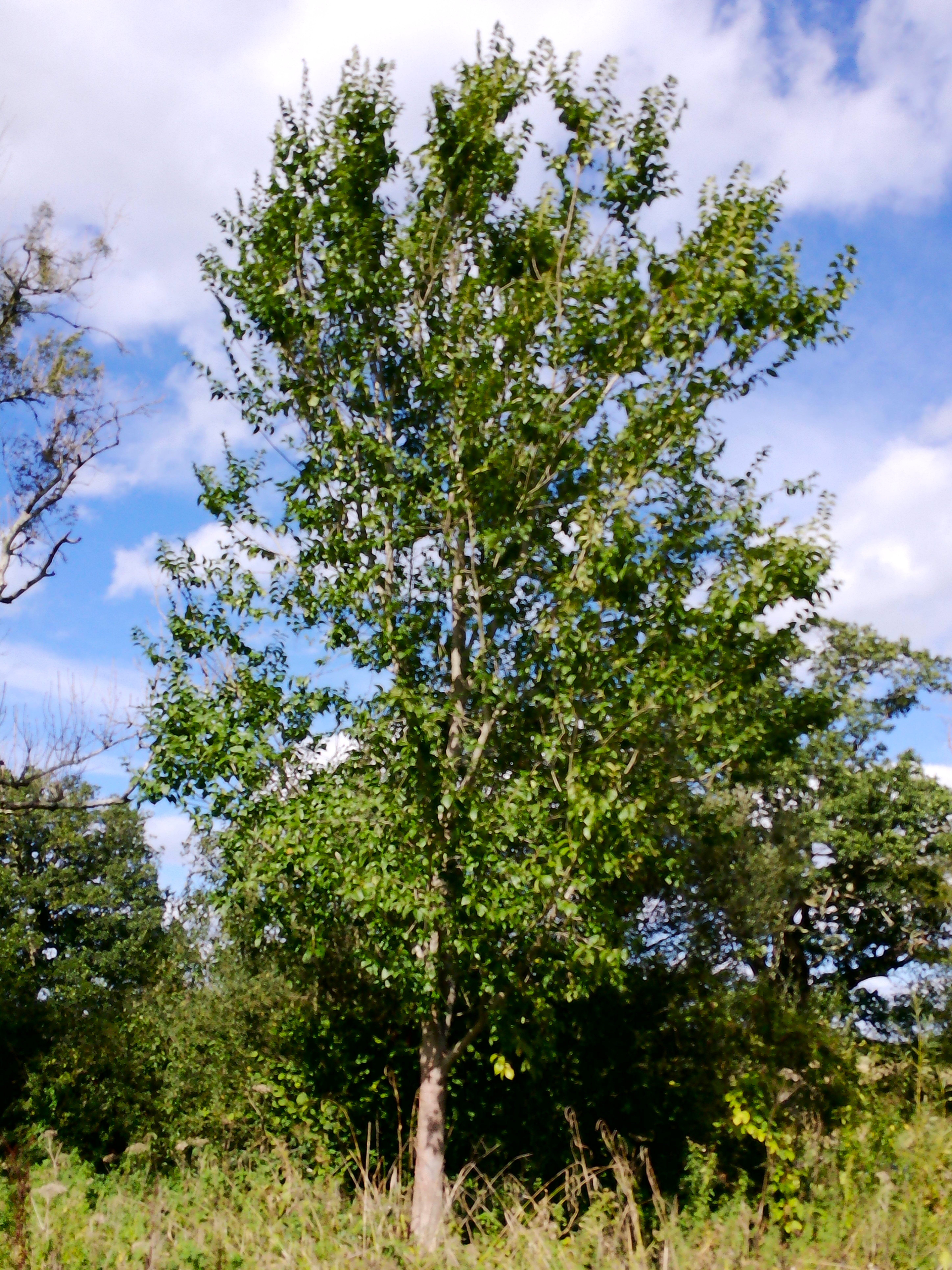
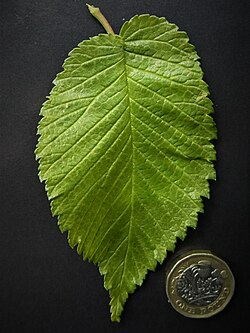
'Wingham'
HYBRID CULTIVAR
(U. wallichiana × U. minor) × (U. pumila × U. minor) o.p. × (U. × hollandica ‘Vegeta’ [:Huntingdon Elm] × U. minor) o.p.
ORIGIN
Istituto per la Protezione delle Piante (IPP), Florence, Italy
DESCRIPTION
A complex hybrid cultivar, imbued with the second-highest level of DED resistance of all the 1400+ cultivars raised by IPP, suffering just 1.44% defoliation after inoculation with the pathogen. The clone was never patented or released to commerce owing to what was considered its disappointing amorphous form. The tree can nevertheless grow with extraordinary vigour, increasing in height by almost 2 m in Italy, and in England where planted in moist, fertile, alluvium along rivers. However, its performance in other conditions has been very disappointing, notably on chalk and Reading Beds clay.
A relative newcomer to the BC trials, Wingham has yet to be found hosting the White-letter Hairstreak, but confidence is high since all its known ancestors are proven hosts. The mid–green to malachite leaves mirror those of the Huntingdon Elm, one of its ancestors, while the samarae measure 25 × 16 mm on long petioles.
Originally numbered FL493 by IPP, the clone was named ‘Wingham’ for the village in Kent where it was so successfully trialled by the late Dr David Herling, who introduced it to the UK.
PERFORMANCE

Stability
Resistance to exposure
Resemblance to native elm

Suitability for street planting

Rate of growth
Tolerance of waterlogging
Tolerance of drought